Overnight Charging Is Fine — This Daytime Habit Ruins Your Battery
Overnight charging is largely a myth. Heat generated during heavy daytime use is what actually degrades your phone's battery health over time.
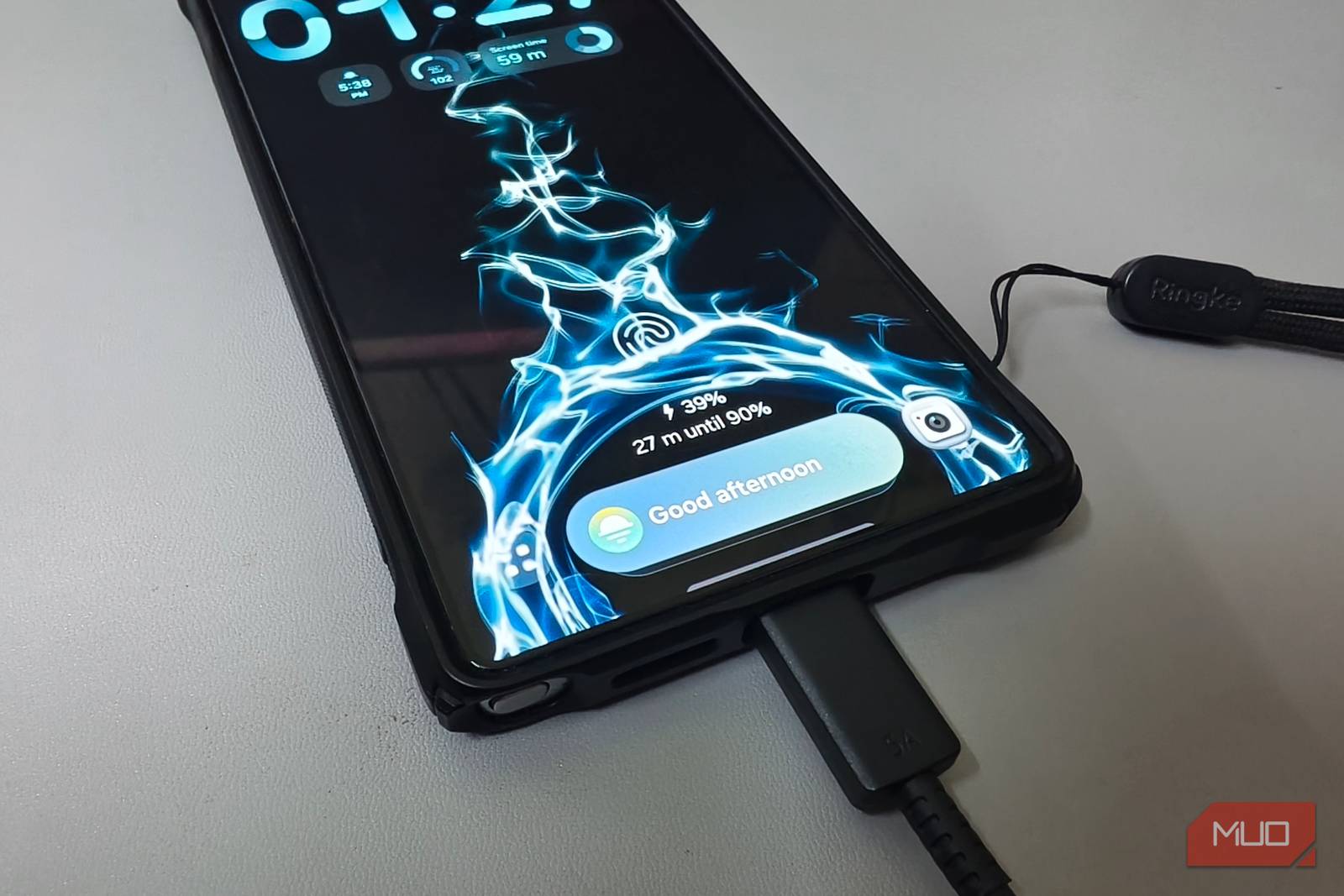
The most common battery advice on the internet is to never charge your phone overnight. So you take it seriously, unplugging before bed every night, never letting the phone stay at full capacity for long. And yet, a year later, your battery health still drops into the eighties. Overnight charging, it turns out, has almost nothing to do with that loss. What’s actually wearing your battery down is something you do during the day, every day.
Overnight Charging Stopped Being a Problem Years Ago
Smart Charging Keeps Your Battery Calm All Night
Admittedly, the fear makes sense when you picture a wall adapter constantly pumping power into a full battery. In practice, charging circuits stopped working that way over a decade ago.
Every modern phone has a dedicated power management controller that decides exactly how much electricity enters the battery. When your phone hits full capacity at two in the morning, that controller scales the current back to near zero and only lets in brief maintenance top-ups to hold the level steady. The battery spends the rest of the night barely working at all.
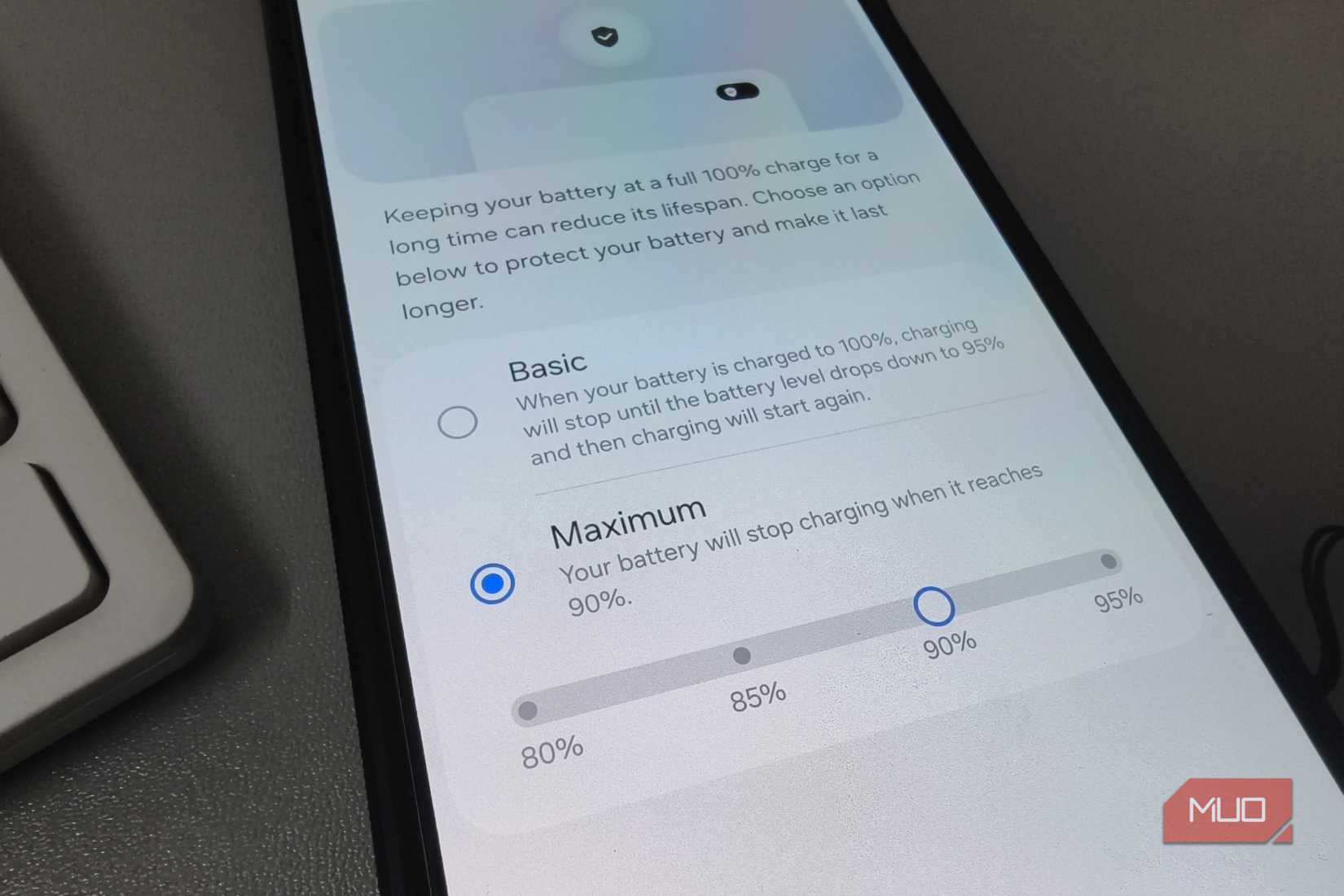
To make things even safer, operating systems now step in with predictive charging schedules. Both iOS and most major Android skins, including Samsung’s One UI and Google’s Pixel software, learn your morning routine and deliberately pause the charge at around 80 percent while you sleep. The battery sits at peak voltage for a brief window instead of the entire night.
Electrically speaking, your nightstand is the calmest environment your phone experiences all week. Pulling the cable at midnight accomplishes nothing because the hardware already solved that problem for you.
What Breaks Down Inside a Lithium-Ion Battery
Temperature Decides How Long Your Battery Lasts
Every phone battery has a thin protective film inside the cell called the SEI layer. This film forms naturally during the first few charge cycles, and it actually helps the battery by letting lithium ions pass through while shielding the electrode from further chemical reactions. The problem is that it never stops growing.
As the cell voltage climbs past 4.2 volts approaching full charge, the stress on this film increases, and with each cycle it gets a little thicker, trapping lithium ions that the battery needs to store energy. Over time, fewer ions remain available, and the battery’s total capacity quietly shrinks.
Left alone, this process is gradual. Heat changes that. Chemical reaction rates inside a lithium-ion cell roughly double for every 10-degree Celsius rise in temperature. In testing, batteries kept at 25°C lost about 3.3 percent of their capacity after 200 cycles. At 45°C, that number jumped past 6.7 percent. The cycle count was identical, but the hotter battery lost over twice as much capacity. Heat also feeds on itself. A thicker SEI layer increases internal resistance, so the battery generates more heat during charging, speeding up the growth all over again.
The heat doesn’t just speed up SEI growth, though. It also breaks down the liquid electrolyte inside the cell, and this reaction doesn’t even require the battery to be charged. It happens during idle time, during storage, whenever the internal temperature stays high for too long. No software update can reverse this kind of chemical wear. This is why your battery’s worst enemy isn’t the number of times you charge it — it’s how hot it gets while you do. A battery that stays cool through 500 cycles will outlast one that regularly runs hot through 300.
The Daytime Habits Doing the Real Damage
Active Charging Under Heavy Load
The most damaging scenario for a lithium-ion battery is charging while the phone is simultaneously under heavy load. Using your phone for navigation, gaming, or video streaming while it is plugged in combines two major heat sources at once: the charging circuit and the processor. Internal temperatures can spike well beyond what any nighttime charge ever produces, and that heat is sustained for as long as the session lasts.
Leaving your phone on a car dashboard in direct sunlight compounds the problem further. Even without any active use, a phone sitting in a hot car can reach internal temperatures that accelerate electrolyte breakdown within minutes. The battery doesn’t need to be cycling to sustain damage — it only needs to be hot.
Fast charging, when used repeatedly throughout the day, also contributes more than overnight charging ever could. Higher wattage means more heat generated during the charge session, and if the phone is already warm from use, that heat has nowhere to go.
The practical takeaway is straightforward: let your phone cool down before plugging it in after intensive use, avoid charging while gaming or using GPS for extended periods, and keep the phone out of direct sunlight. These habits have a measurable impact on long-term battery health in a way that your overnight charging routine simply does not.