How to Protect Your Car's Air Quality During Wildfire Smoke Alerts
Wildfire smoke is affecting cities across the U.S. Here are three practical ways to reduce your exposure while driving during air quality alerts.
In the summer of 2023, an eerie and lingering haze blanketed skies all across the East Coast following a record wildfire season in Quebec. New York City’s Air Quality Index reached a hazardous level of 465 as the smoke eventually drifted into cities like Boston, Washington, D.C., and Philadelphia. More than 350 million people were exposed to record levels of unhealthy air before it finally cleared.
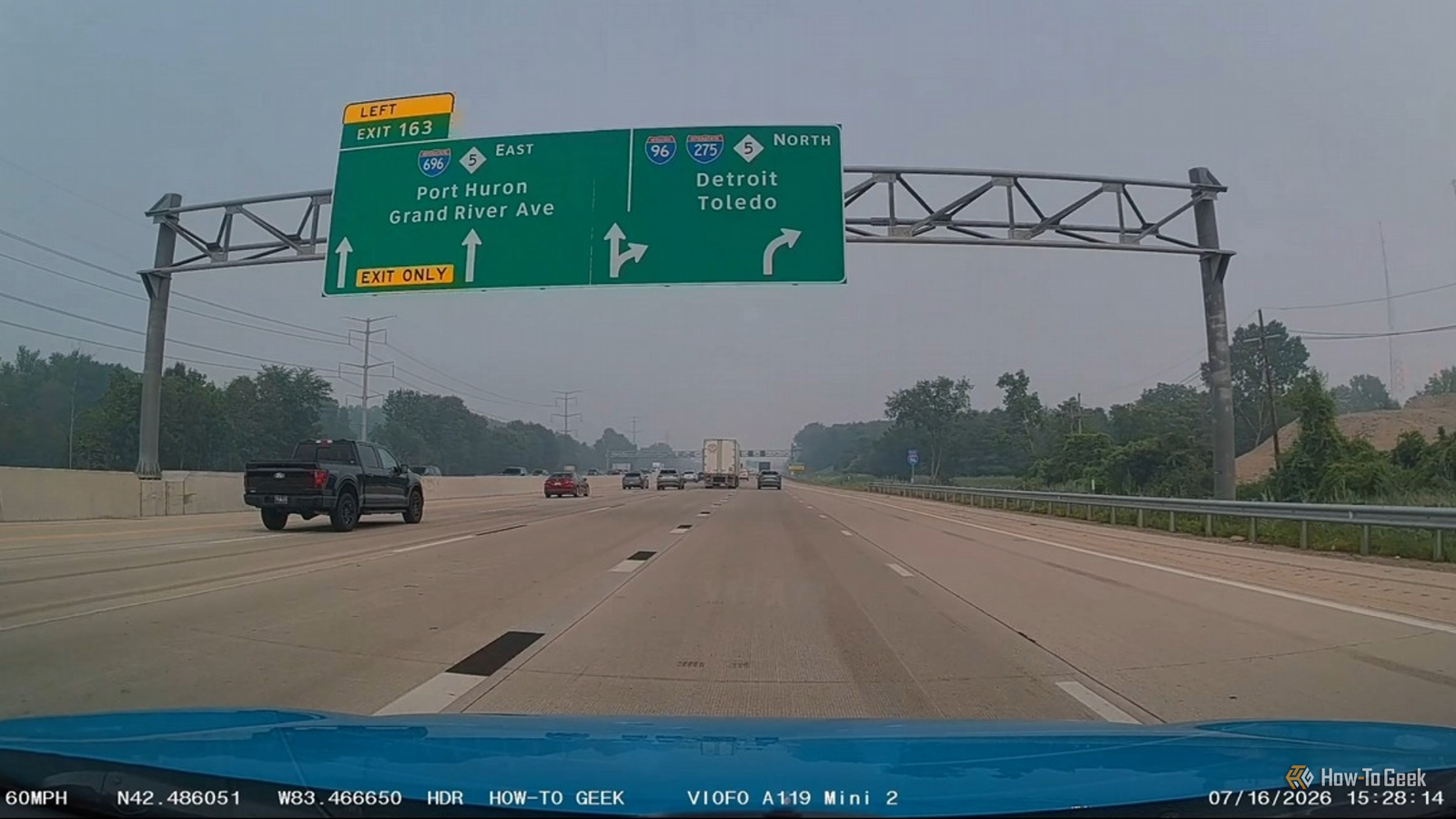
Canada is fighting hundreds of wildfires again this year. Shifting winds are steering wildfire smoke across the U.S. once more, triggering alerts in cities outside the regions typically associated with wildfire risk. Minneapolis, Chicago, and Detroit each rank among the most impacted cities right now.
If you deal with sinus pressure and allergies, you can feel the effects of these air quality alerts even indoors. When you have to be out and about during an alert, here are three tricks to minimize the impact of poor air quality in your vehicle.
Check the Air Quality Index
Try to get everything done in one trip if possible

The EPA’s AirNow tool pulls readings from official monitoring stations across the country and turns them into a simple, color-coded score for your zip code. It functions as a website at airnow.gov and as a free app for iPhone and Android.
If your area has a similar alert and you are able, try running your errands at another time. In the interest of better fuel economy, combining errands and grocery shopping into one trip is a good habit — and that same strategy helps when air quality alerts are in the forecast.
Several states also have their own air quality trackers, often with monitoring specific to a given location and even at the neighborhood level. For example, the Texas Commission on Environmental Quality publishes a daily outlook for metro areas across the Lone Star State, as does the New York Department of Environmental Conservation.
You can also search for “[your state] air quality,” which should turn up a more local option if one exists.
Check Your Cabin Air Filter
Look for a “MERV-13 equivalent” rating
Nearly every vehicle sold in the last two decades has a cabin air filter, tucked behind the glove box or under the hood, that traps dust, pollen, and other particles before they reach the vents. Lingering wildfire smoke, in addition to a normal day of dust and pollen, can shorten the usable life of your cabin air filter.
If your cabin air filter hasn’t been replaced in a year or more, or you cannot remember when you last changed it, now is a good time. You can DIY it at home, or have your mechanic replace it the next time you are in for an oil change.
Your home wages the same battle against wildfire smoke as your car does, though it uses a filter rating system different from that of automobiles. MERV, or Minimum Efficiency Reporting Value, measures how well a home HVAC filter captures particles by size, with a range of 1 to 16 — the higher the number, the smaller the particles it filters out. The EPA recommends a rating of 13 or higher for filtering wildfire smoke indoors.
Some aftermarket automotive brands advertise higher-end cabin filters as “MERV-13 equivalent” for comparison, using electrostatic, multi-layer designs to trap fine particulates.
Switch to Recirculate Mode
Vary the cycle on longer trips
Most vehicles have a recirculate mode on the climate control system, typically indicated by a button showing a car with a curved arrow inside it. When activated, this setting closes off the fresh air intake and continuously cycles the air already inside the cabin through the filter, rather than drawing in outside air. During a wildfire smoke event, switching to recirculate mode is one of the simplest and most effective ways to limit the amount of smoke particulates entering your vehicle. On longer trips, cycling the mode on and off periodically helps prevent the interior air from becoming stale while still limiting your overall exposure to outdoor pollutants.