Visa Connects ChatGPT to Its Payment Network for AI Purchases
Visa has integrated its payment network with ChatGPT, allowing AI agents to browse products and complete retail purchases autonomously within preset spending li
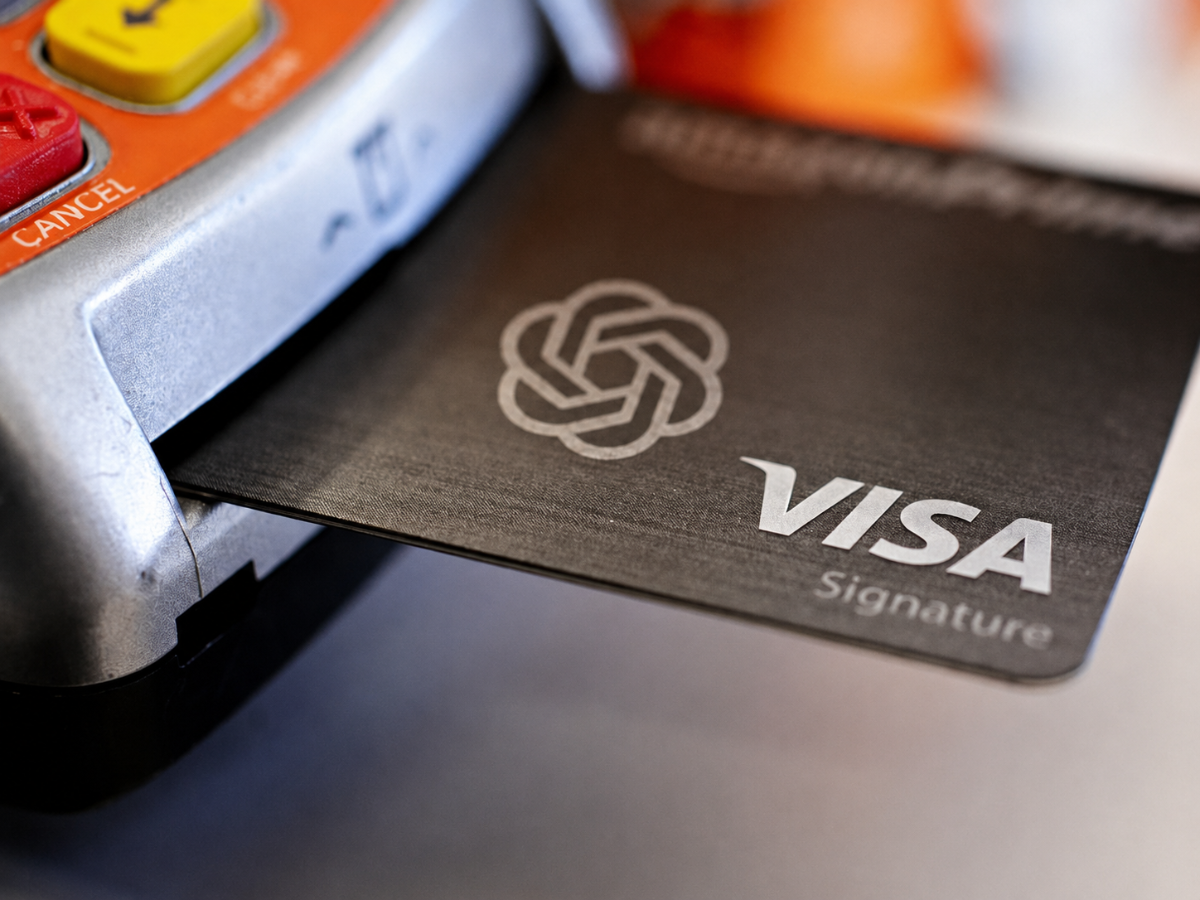
Visa has integrated its payment infrastructure with ChatGPT, allowing AI agents to recommend retail products, review vendor catalogs, and complete purchases without user intervention during checkout.
This connection uses Visa’s payment network to process transactions at any compatible merchant, rather than limiting AI-driven shopping to one specific retailer.
Previously, AI retail integrations were mainly restricted to retailer-built chatbots that could only access their own inventory. The new Visa integration links an open-web reasoning model directly to a universal transaction network.
How the Visa and ChatGPT Agent System Works
When a ChatGPT user asks the agent to buy an item, the system takes care of choosing the vendor, comparing products, and handling payments.
This process relies on pre-set spending limits that are authorized in advance by the user, ChatGPT, and Visa.
Visa supports this by using programmatic tokenization to facilitate the purchases.
- First, the user pre-approves the ChatGPT environment with specific spending details.
- When the model decides to make a purchase, it creates a one-time payment token through the Visa network.
- The agent then sends this token via API to the merchant’s backend systems.
- The transaction settles just like a digital wallet payment, without needing to show a user interface.
This method avoids the manual data entry, CAPTCHA checks, and two-factor authentication that usually slow down or block automated processes.
What Users Should Know
For consumers, the integration enables ChatGPT to handle retail purchases on their behalf within predefined spending limits.
Personalization data — including previous preferences, sizing, budget restrictions, and brand loyalties — is stored securely in the user’s profile within the language model, rather than being inferred by retailers through tracking cookies.
The AI agent can also manage returns and customer service requests. If a product doesn’t match the original specifications, the user can instruct the agent to follow the merchant’s return procedures, process the refund, and generate shipping labels.
Prompt injection attacks could potentially manipulate an agent into making purchases from malicious vendors or authorizing larger transactions than intended.
Visa’s network acts as the last line of validation, using fraud detection models on incoming token requests. To reduce risk, users should set conservative spending limits during pre-authorization, regularly review their agent’s purchase history through their Visa account, and be aware that vague prompts could result in unintended purchases. If agent purchasing is not needed, it is best to disable it entirely.
What This Means for Retailers
Retailers need to share machine-readable inventory data to stay visible to AI agents. As SEO shifts toward language model optimization, structured data feeds, clear API documentation, and explicitly formatted product attributes become essential. Without high-quality metadata, merchants will be effectively invisible to autonomous agents.
Display ads, visual merchandising, and UI optimizations do not influence the model’s choice criteria. Retailers tracking bounce rates, session durations, and cart abandonment will need to adopt new telemetry that focuses on API queries from known large language model IP addresses.
Loyalty programs should be integrated into payment tokens or the user’s LLM profile. Since an autonomous agent assesses the market anew with each prompt unless instructed otherwise, having this data readily accessible is important.
Retailers using headless commerce architectures have an advantage, as they can process the agent’s payload, confirm stock, and complete payments in milliseconds.
Availability
Visa and OpenAI have not provided details about the regional rollout schedule, which payment cards or accounts will be eligible, or how merchants can sign up for token-based agent purchases. Users interested in the feature should monitor their ChatGPT account settings and Visa account configurations for the agent purchasing option as it becomes available.