Meta Muse AI Agent: Impressive Technology, Serious Trust Problems
Meta Muse is a capable AI agent that can manage your digital life, but its privacy record raises real concerns about handing it that access.
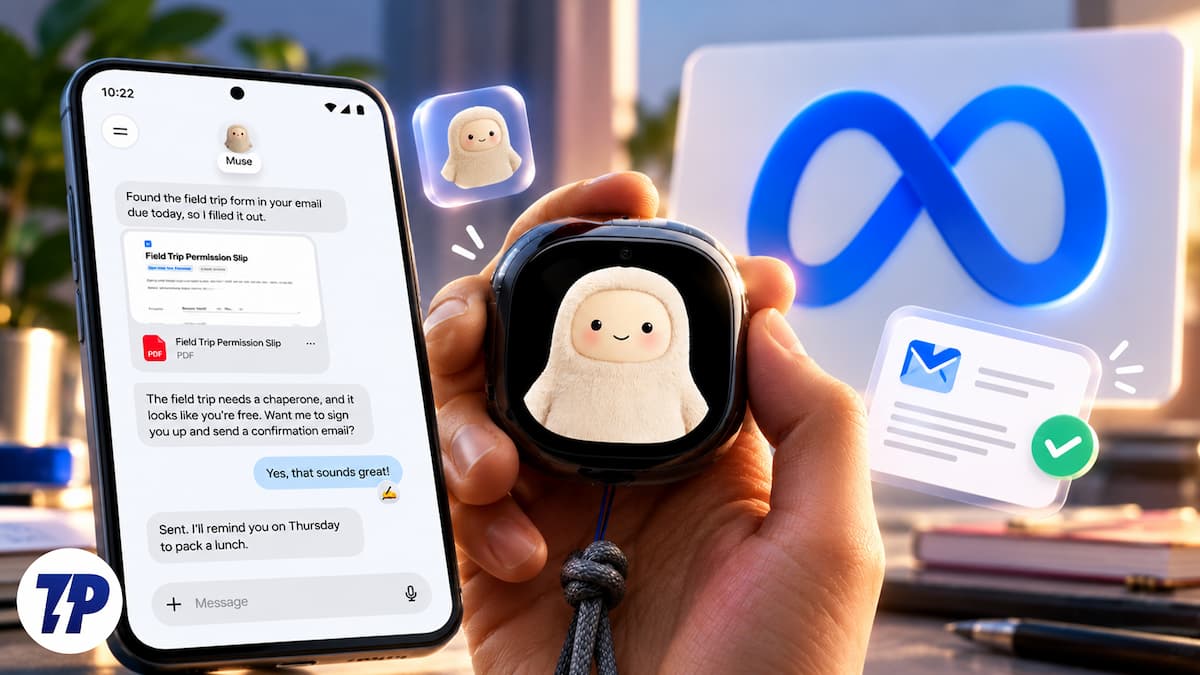
A few days ago, Meta hosted its annual hardware/software event, Meta Connect, at Menlo Park, California. The event was dominated by new hardware launches, such as the new Meta Ray-Ban glasses, new VR glasses, and camera-free Ray-Ban glasses (audio only), but swimming beneath the surface of all these was something that was actually introduced earlier. Meta had introduced Meta Muse in early September, but announced the rollout of the Muse AI agent on its Meta wearables and Meta Muse Charm at the event, and for us, that was easily the real highlight of Meta Connect.

After investing heavily in recruiting AI talent, Meta finally had something to show: an AI agent that will basically make your dreams of having a robot butler come true. Not surprisingly, it has been making massive tech waves ever since. Since Meta Connect and its rollout, Muse has been topping app store charts, and its early numbers are being compared with ChatGPT, with many pointing out that it is far ahead of OpenAI’s chatbot’s numbers.
While this may paint a very rosy picture for Meta Muse, the reality may be a trifle thorny.
What Those Numbers Do Not Tell – The “Threads” Deception
These numbers, impressive as they are, do not necessarily mean Muse is a runaway success. There are a few reasons for this. Topping app store charts is more of a temporary phenomenon, often influenced by what is trending in a particular week, and does not represent real industry trends. Also, Meta has billions of users across different social media and messaging platforms, which makes it easy for the tech giant to get a few million users quickly without too much trouble. But the adoption rate might not match the number of downloads or sign-ups.
We have seen this happen with Meta’s X rival app, Threads, as well. It has more “active users” as per the numbers than X, which means it must be more used and popular than X, but that is mostly because of Threads’ integration with Instagram and Facebook, which gets the app most of its “active users.” However, the time spent on the app is not nearly the same as its other two sibling social media apps. Similarly, early ChatGPT comparisons with Meta Muse signups may not be fair, because ChatGPT was not launched or advertised as a tool for the masses when it was first released. It did not have the sort of subscriber base and reach that Meta has, and back then, AI chatbots were not too common either.
Definitely a Big Deal
That does not mean Muse does not represent a big tech leap. So far, AI chatbots have generally been used for queries, information, help with work, and even personal advice, but that is mostly about it. All of these chatbots are more about helping you with your queries, with no bar to the nature of the query. While useful in this regard, many are not able to perform actions that have an impact on your day-to-day life. That is where Meta Muse differs.

As mentioned earlier, Muse is the robot butler that the future always promised us. It can get tasks done and help you with managing your digital and even real life. Once you give it access, the AI agent can go through your mail, find messages, draft new messages, reply to emails, all without too much intervention. That might not sound too impressive, as most AI agents and virtual assistants can do the same with a simple command. But Muse goes a step further — it can even make purchases, make reservations, book appointments, and more, across different devices and platforms. If allowed, Muse can make deals on Facebook Marketplace, book you a table at your favorite restaurant, or call you a cab, all without needing any major intervention. Proper butling.
Muse Has Power and Potential, but Does Meta Have Our Trust?
As impressive and life-altering as it may sound — some are calling it the biggest tech innovation since the iPhone — Meta still has a massive hurdle to cross to make Muse the AI butler it wants it to be. And that is the lack of trust in Meta.
For all its innovation and massive subscriber base, Meta has been in a number of controversial situations when it comes to security and privacy. Zuckerberg’s brand has been accused of and even found guilty in cases that range from rigging elections, pushing agendas and ads, to exposing young children to adult content and potential groomers, to monopolizing social media and personal messaging space and using unfair means and practices to kill competition. Its recent hardware hit, the Meta glasses, has also got into a privacy mess, and has been infamously dubbed pervert glasses, following reports of their being used to record people without their consent.

Now, Muse requires even more data and access to private information to actually deliver on its promises. To be able to draft emails, it needs access to your email account. To be allowed to send messages, it needs permission to read, understand, store, and reply to messages, and needs access to your contact list. To make a reservation, it needs to know your location; to order things online, it needs your bank details and your address. Basically, it needs complete access to all your information to act like the magic help that Meta is claiming it can be.
And that is where the real concern with Muse lies. Had this been any other company — if Apple had managed to deliver on its intelligent Siri promises or Google had delivered Gemini with such prowess — handing over the keys to your digital life would feel far less apprehensive. But giving Meta even more access to your data than it already has feels genuinely scary. Even if we have come to terms with the fact that we are all under passive surveillance from brands at all times, giving complete control of personal data over to Meta is a significant ask.
Some of the recent headlines Muse has made do not help its cause. Recently, the AI agent not only made a deal for its user on Facebook Marketplace but even shared his address with the buyer — all without consent. The user, a tech YouTuber named Matt Robb, mentioned how the AI agent accepted low offers and even pretended to be the user while chatting with the buyer, directing the buyer to his address when he was not home. Once Matt realized what was happening, he specifically instructed Muse not to share his address. He then asked friends to send him messages on Facebook Marketplace to test whether the agent would share the address. Rather disturbingly, it did — multiple times, and even accepted low offers, all without consent. In another report by AppleInsider, it was alleged that Muse accessed and uploaded past and present Apple Messages even though the user stated he had not granted it permission to do so. All this despite Meta’s claims that Muse has strong privacy and security protections.
None of this takes away from the fact that Meta has created something genuinely powerful with Muse. It has managed to deliver a finished, capable AI agent that can manage your digital life, if you let it. Unfortunately, it may also harvest your data, serve targeted ads, and conduct conversations on your behalf by impersonating you. The AI agent is not just about technology — it is also about trust. Meta has delivered on the first front with Muse, but until it delivers on the second, it will be difficult for most users to hand over that level of control without serious reservations.