5 Ryobi Tools Worth Upgrading to Brushless Motors
Brushless motors aren't always worth the premium, but on these five Ryobi tools the cheaper motor costs more over time.
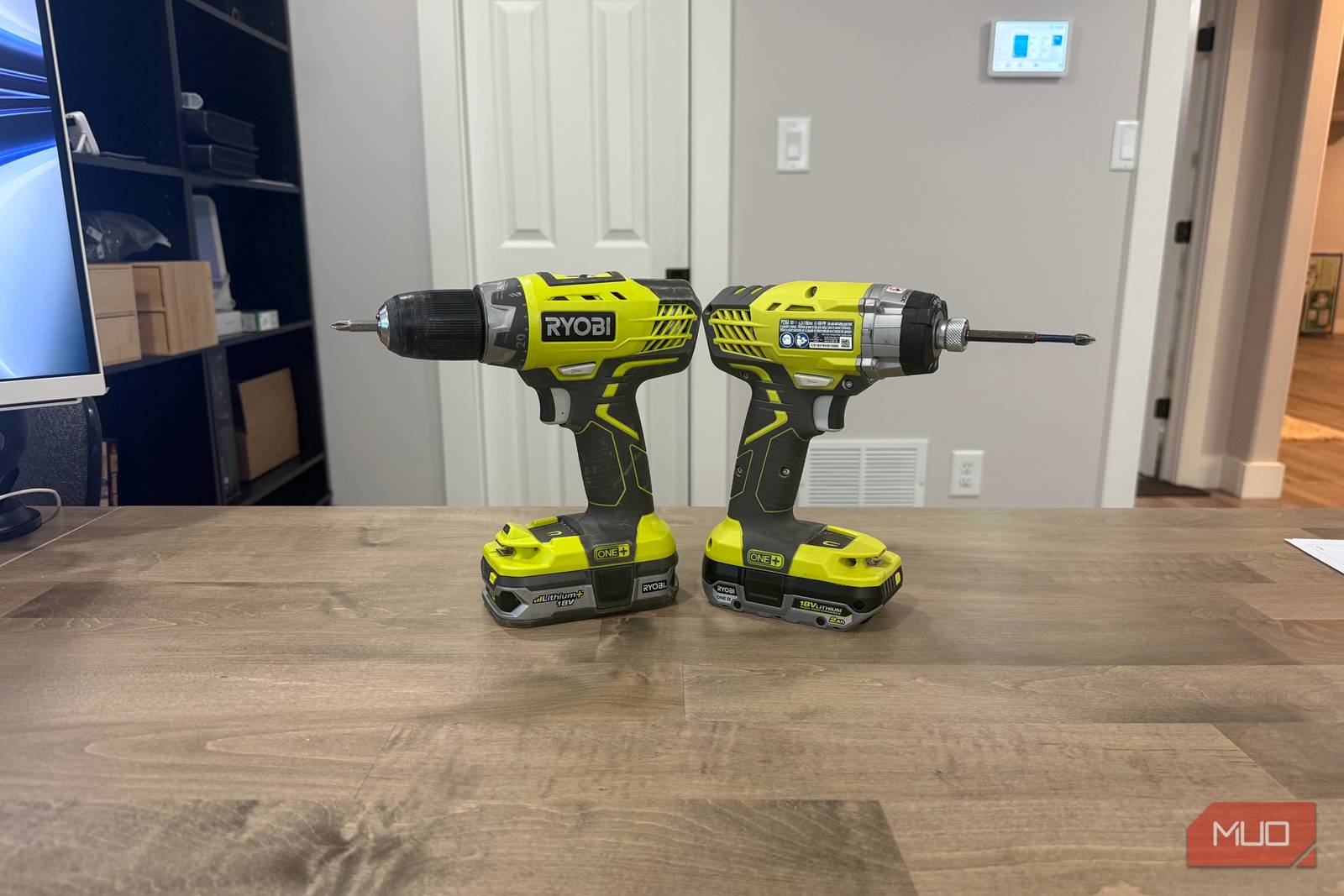
Most of Ryobi’s popular tools come in two versions. One has the base brushed motor; the other carries an HP badge and a brushless motor, and the gap between them runs anywhere from $25 to more than $100. Brushless is wasted money on some tools, and a brushed sander can serve perfectly well without regret.
This list is the other side of that ledger. After years of stocking a workshop and a yard shed with Ryobi batteries, five tools stand out where the cheaper motor costs more over time — whether that shows up as stalled cuts, drained packs, or a tool too bulky for the job. Three run on 18V ONE+ and two on 40V. On all five, the motor either works hard for a long stretch or has to fit somewhere tight.
The Circular Saw
A Long Rip Never Lets the Motor Rest
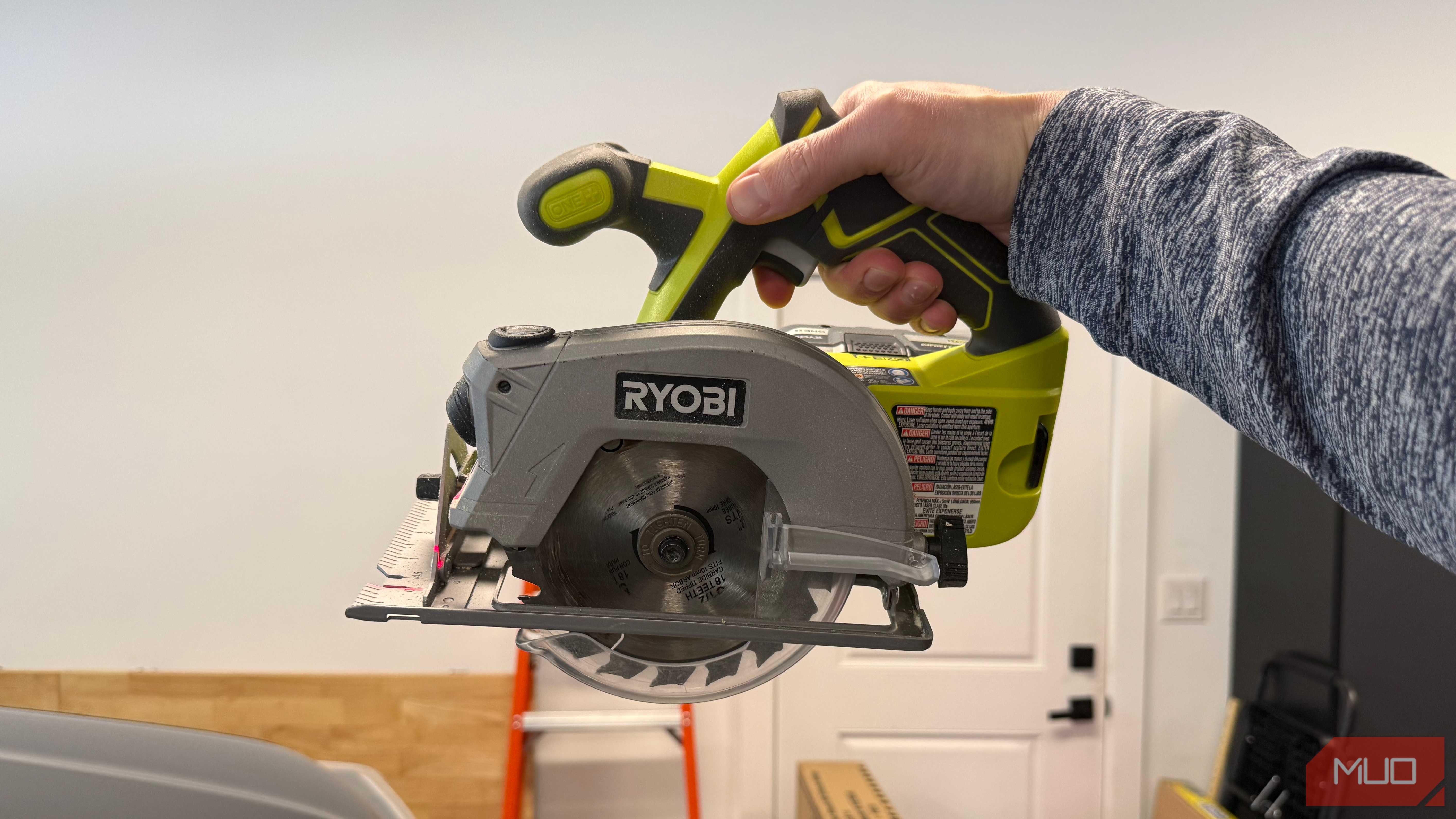
A 5-1/2-inch ONE+ brushed saw can handle a desk build and years of 2x4 crosscuts. Plywood is where it runs out of breath. A 4-foot rip keeps the blade buried for the entire pass, the motor slows, and feed rate has to ease to match it. The HP brushless track saw doesn’t behave that way. It carries its blade speed from one end of the sheet to the other, and that contrast demonstrates the motor difference more clearly than any spec sheet.
Ryobi rates the HP brushless 7-1/4-inch saw at up to 40% faster cutting and more than 325 cuts per charge. It lists around $129 bare, roughly double the small brushed saw, and it’s the first place to spend the difference.
The Drill/Driver
Hole Saws Punish a Brushed Motor
The brushed PCL206 handles pilot holes and cabinet screws without complaint. Chuck a large bimetal hole saw into it for desk grommets or duct runs, however, and the situation changes. A hole saw loads the motor hard for 30 seconds or more at a time, hole after hole. The drill runs warm, and the battery gauge falls faster than on any other comparable job.
The brushed model makes 515 in-lbs of torque for about $59. The HP brushless drill makes 750 in-lbs for $99. That $40 buys headroom for the exact work that makes a brushed drill struggle, including hole saws, spade bits, and long augers through framing. If you’ll only hang pictures with your drill, keep the cheap one.
The Compact Impact Driver
The Smaller Motor Is the Whole Point
Power isn’t the argument on this one. Ryobi’s brushed impact driver actually posts a slightly higher torque number — 1,800 in-lbs against 1,700 — and costs about $59. What the HP compact brushless driver buys is size. A brushless motor is physically shorter, so the tool measures 5.3 inches from collet to tail and weighs noticeably less than the brushed version.
Available bare for about $84, it’s the kind of driver suited to mounting a folding squat rack or any task requiring overhead or extended-arm work. A tool you can hold at arm’s length without wrist fatigue is a tool you place more carefully, and a short nose reaches fasteners that a full-size driver can’t line up on. It also runs better on a compact battery, which keeps the whole package small.
The 40V Stick Edger
Dirt Is a Heavier Load Than Grass
An edger blade spins through soil, roots, and the occasional buried rock. That’s far more resistance than string meeting grass, and it lasts the length of every driveway and sidewalk on the property. The 40V HP brushless edger cuts a clean trench along all of it, including stretches where turf has crept over the concrete.
Ryobi says it delivers more power than a 21cc gas edger, and the company’s own comparison puts it 70% ahead of an edger attachment on a standard 40V power head. At $259 bare, it’s the most expensive tool on this list, but it’s still the better choice over the attachment route — an underpowered edger that rides up over established edges defeats the purpose of owning one at all.